
The distance between the Canary Islands and St. Louis is 4,300 miles. It took Alfredo Cabrera 32 years to make the trek.
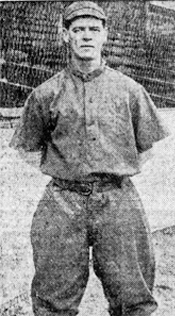 Cabrera is the only person born in the Canary Islands to play baseball in the big leagues. The shortstop was 32 when he debuted with the Cardinals in 1913.
His time in the majors, however, was as fleeting as a glimpse of a canary in the wild. Cabrera appeared in one game, played four innings and never returned.
Instead, he had a long professional playing career in Cuba and as a Hispanic minor-league baseball pioneer in the northeastern United States.
Island hopping
Formed by volcanic eruptions that created black sand beaches along crystal-clear turquoise water, the Canary Islands of Spain are within 65 miles of Africa’s northwestern coast. Wild canaries are a native species of the islands. (Cardinals, however, are not.)
Alfredo Cabrera was born in the Canary Islands on May 11, 1881. He was a descendant of Guanches, the indigenous people of the islands, according to the St. Louis Post-Dispatch. Cabrera arrived at a time when the Canary Islands transitioned from an agricultural economy (largely bananas and sugar cane) to tourism as steamships carried winter-weary visitors to the port of Las Palmas.
Though raised in the Canary Islands, Cuba became Cabrera’s home. He “most likely sailed from the Canary Islands to Cuba around 1900, as a teenager, and almost immediately established himself as a gifted baseball player,” according to Erik Malinowski of the Society for American Baseball Research.
In 1901, when Cabrera turned 20, he made his professional baseball debut in the Cuban League. He spent 18 seasons in Latin leagues, primarily with Almendares, and was player-manager for part of that time, according to Seamheads.com. Cabrera was inducted into the Cuban Baseball Hall of Fame in 1942.
Integrating the minors
Cabrera was part of a team, the Baseball Stars of Cuba, that toured the United States in 1906. Charles Humphrey, owner of the New Britain club in the Connecticut State League, was impressed by how the Cubans played. Humphrey went to Havana and recruited four Cubans _ third baseman Rafael Almeida, outfielder Armando Marsans, pitcher Luis Padron and the shortstop, Cabrera _ to play for New Britain in 1908, according to Weston Ulbrich of the Greater Hartford Twilight Baseball League.
Humphrey named the New Britain club the Perfectos.
Bigots objected to the newcomers joining an all-white league. Recalling those days, Dan Porter of the New York Daily Mirror wrote in 1933, “As a kid, I saw a half dozen Cuban players break into organized baseball in the old Connecticut League. I refer to players like Marsans, Almeida, Cabrera and others. I recall the storm of protest from the One Hundred Per Centers at that time but I also recall that all the Cubans conducted themselves in such a manner that they reflected nothing but credit on themselves and those who favored admitting them to baseball’s select circle.”
A right-handed batter, Cabrera was 5-foot-10 and lean, with a complexion “the hue of burnt leather,” the New Britain Herald reported. (The Post-Dispatch described his skin as being “the color of a coconut shell.”)
Of the four from Cuba to join New Britain, three eventually reached the majors. Almeida and Marsans debuted with the Reds in July 1911. Almeida played three seasons (1911-13) with Cincinnati. Marsans spent sevens seasons in the big leagues with the Reds (1911-14), Browns (1916-17) and Yankees (1917-18). He also had a stint with the St. Louis Terriers of the Federal League (1914-15).
Cabrera played five seasons (1908-12) with New Britain _ (the franchise shifted to Waterbury in June 1912) _ before getting to the majors. His path to St. Louis, however, required a detour through Indianapolis.
St. Louis shuffle
Bob Connery played for and managed Hartford of the Connecticut State League from 1908-12 and was quite familiar with the talents of Alfredo Cabrera. Connery became a Cardinals scout after the 1912 season. He was a friend of Cardinals manager Miller Huggins and both were friends of Mike Kelley, who had become manager of Indianapolis in the American Association.
On Connery’s recommendation to Kelley, Indianapolis acquired Cabrera from the Connecticut State League in January 1913. (Two years later, Connery convinced the Cardinals to sign Rogers Hornsby.)
During 1913 spring training, Cardinals shortstop Arnold Hauser injured a knee. Needing shortstop help, Huggins turned to his friend Mike Kelley. Indianapolis sent two shortstops _ Cabrera and Charley O’Leary _ to the Cardinals.
Unlike Cabrera, O’Leary, 37, had big-league experience. He was the shortstop for the Tigers in two World Series (1907 and 1908). In his last big-league game, he helped turn a triple play before being dispatched by the Tigers to Indianapolis in April 1912.
O’Leary (starter) and Cabrera (reserve) opened the 1913 season with the Cardinals. According to the Indianapolis Star, the Cardinals were impressed by “the dandy throwing arm the Cuban exhibited.”
Huggins told the Post-Dispatch, “I like that fellow’s looks and I intend to give him a thorough trial.”
However, once the season started, Huggins stuck with O’Leary at shortstop and kept Cabrera on the bench. The Cardinals began looking to trade the rookie.
“Cabrera is a shortstop of rare promise and he is the entity which may be used as a pawn to strengthen the club in other departments,” W.J. O’Connor reported in the Post-Dispatch. “Either Brooklyn or Boston could use Cabrera, and Huggins will carry Alfredo until he makes the first swing around the (league) … Huggins is so well-fortified at short, now that O’Leary has proved himself still a major-league performer, that he can readily pass up a promising youngster like Cabrera … If either (Brooklyn) or (Boston) wants Cabrera, Huggins will pass him over for a first-string pitcher or an outfielder.”
One and done
After O’Leary pulled up lame rounding first in a game at Brooklyn on May 15, 1913, the Post-Dispatch reported Cabrera would make his big-league debut the next day as the starting shortstop at Ebbets Field.
Huggins put Cabrera seventh in the batting order, between Rebel Oakes and Ivey Wingo. Pitching for the Cardinals was left-hander Slim Sallee, who would win 19 that season for a club that totaled 51.
The Brooklyn lineup included leadoff batter and center fielder Casey Stengel, and cleanup hitter and left fielder Zack Wheat, who remains the Dodgers’ career leader in total bases (4,003), hits (2,804), doubles (464) and triples (171). The Brooklyn pitcher, Cliff Curtis, never achieved a winning record in five big-league seasons and was a 24-game loser with Boston in 1910.
In the first inning, the Cardinals scored three times against Curtis and had a runner on third, two outs, when Cabrera came to the plate. He grounded out to the pitcher, ending the inning. Cabrera batted again in the third, grounded to short and was out by 20 feet at first, the St. Louis Globe-Democrat reported.
Cabrera didn’t get a fielding chance, but Huggins apparently was miffed that the shortstop didn’t get to a grounder that went for a hit, the New York Herald reported. In the fifth, Cabrera was removed for a pinch-hitter and Lee Magee shifted from left field to shortstop. Brooklyn won, 6-5. Boxscore
The Cardinals started a utility player, Possum Whitted, at shortstop in their next game. Cabrera was sent to the Springfield (Massachusetts) Ponies of the Eastern Association. “He did not make a very satisfactory showing (with St. Louis) in the eyes of manager Huggins,” the Springfield Daily Republican noted.
International game
Cabrera spent three more seasons (1913-15) in the minors but his playing days lasted much longer in Cuba. As player-manager, he led Almendares to a Cuban League championship in 1915.
According to the Greater Hartford Twilight Baseball League, “Cabrera’s latter years were spent as groundskeeper of Havana’s El Gran Stadium.”
Today, baseball is part of the Canary Islands sports culture. Eric Gonzalez-Diaz, born in the Canary Islands town of San Juan de la Rambla, was a pitcher in the Padres farm system from 2008-10 and played for Spain in the 2013 World Baseball Classic. A Canary Islands team, the Tenerife Marlins, became 2025 Baseball European Cup champions.